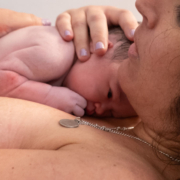

mother breastfeeding baby to sleep

Understanding Sleep Associations: Building Healthy Rhythms That Last

Most parents are told that their baby’s sleep habits are “bad.”

That feeding to sleep, rocking, or contact naps will create long-term problems.

But the truth is — every baby learns through relationship first.

What we often call a sleep association is actually a connection pattern — the way your baby’s nervous system feels safe enough to rest.

When we shift the story from “habit” to “pattern,” something softens.
We begin to see sleep not as a skill to train but as a rhythm to remember.


🌿 Reframing Sleep Associations

Babies associate everything with safety — your scent, your heartbeat, the light in the room, the way your breath slows as you hold them.
These are not crutches. They are cues of regulation.

Sleep challenges often arise when those cues disappear too suddenly, leaving the baby’s body unsure how to return to that state of calm.
When we understand this, we stop trying to remove every comfort — and instead learn to weave new layers of safety and predictability in gentle ways.


💫 Regulate: Start with You

Your baby’s nervous system takes its cues from yours.
If you’re tense, rushing, or worried about doing things “right,” your baby will feel that energy.
When you ground yourself first — slow your breath, release your shoulders, soften your face — you invite your baby into that same state.
This is the foundation of the Sleep Sanctuary Method: regulation before correction.


🌸 Repattern: Creating New Pathways Gently

When you’re ready to shift patterns, do it through layering, not subtraction.
If you’ve always nursed to sleep, start by introducing a small new step — maybe a lullaby, gentle hand on chest, or rhythmic sway before or after the feed.
Over time, these cues create new associations your baby can draw from when you’re not there.

Repatterning is about consistency and compassion — never force, never withdrawal.


🌕 Restore: Protecting the Family Rhythm

Healthy sleep rhythms aren’t just about the baby.
They’re about the whole system.
Protect your own bedtime.
Take turns when you can.
Let rest become a shared value in your home — not another task to manage.


🌙 Integrate: Rest as Relationship

The more connected you feel, the easier rest becomes.
Every bedtime, every nap, every middle-of-the-night moment is a conversation between two nervous systems learning to trust.

When you begin to see sleep as a dance of co-regulation — not control — it becomes sustainable, adaptable, and deeply human.

Ready to begin your own rhythm?
Download the free Rest & Rhythm Guide — your gentle roadmap to restoring calm nights and connected days.
[Download the Guide]


The 8-Month Sleep Shift: Movement, Separation & Connection

(When independence and attachment meet at bedtime.)

Just when you think you’ve found your rhythm, your baby starts waking again. Naps shorten, bedtime stretches out, and you find yourself wondering — “Are we back at square one?”

You’re not.
What’s happening around 7–10 months isn’t a regression — it’s a reorganization driven by rapid neurological and emotional growth.


What’s Really Happening

At this stage, your baby’s brain and body are in overdrive:

  • They may be crawling, pulling up, or cruising — new motor skills that the brain loves to “practice” at night.

  • They’re developing object permanence — realizing you still exist when they can’t see you.

  • Their attachment deepens, and they begin to feel the ache of missing you in a new, conscious way.

  • Language comprehension starts to bloom, adding new layers of excitement — and overstimulation.

All of this growth takes energy, focus, and emotional regulation — which means sleep can temporarily feel off-balance.


Why It Feels So Hard

This stage often looks like:

  • Multiple night wakings

  • Resistance to naps or bedtime

  • Increased clinginess or separation anxiety

  • Early-morning wakings

Your baby’s newfound mobility and awareness create a tension between two developmental needs:
independence (“I want to explore!”) and connection (“But don’t leave me!”).

That tug-of-war plays out most visibly at bedtime — the moment they must surrender to rest and separation.


How to Support Your Baby

1. Lead with connection before separation

At bedtime, fill your baby’s “attachment cup” with slow, grounded presence. Eye contact, soft talking, skin-to-skin cuddles, or a few minutes of playful laughter can release tension and make the transition to sleep feel safer.

2. Keep routines simple and rhythmic

Familiar sequences (bath, pajamas, nursing or bottle, song, dark room) anchor the nervous system. Repetition builds trust — the more predictable bedtime feels, the easier it becomes to rest.

3. Encourage practice during the day

Let your baby explore movement freely while you stay nearby. The more confident they feel in their body while awake, the less compelled they’ll be to practice those new skills at 2 a.m.

4. Soften the expectation of perfect sleep

This stage is an integration period. A few rough weeks don’t mean bad habits — they mean growth. Respond with compassion, not correction.


A Gentle Reframe

“Your baby isn’t regressing — they’re expanding.
Sleep disruptions are simply their way of integrating new awareness, movement, and connection.”

The 8-month shift isn’t about control — it’s about co-regulation.
As your baby grows into greater independence, your calm, consistent presence teaches them that safety remains constant — even when you step away.


Finding Support

If sleep has become unpredictable, or if you’re not sure how to balance independence and connection, I can help.

My customized sleep plans begin at $450 and include two weeks of remote coaching — a gentle, attachment-based approach to restoring rest through rhythm and relational safety.

Download my free guide — Rest & Rhythm: A Gentle Guide to Understanding Sleep Associations — to learn how to create supportive routines and sustainable sleep without compromising connection.


sleeping baby. baby sleep consultant. gentle sleep training. sleep coaching. infant sleep coaching.

The 4-Month Sleep Shift: When Sleep Grows Up

(Not a regression — a reorganization.)

You’ve probably heard of the “4-month sleep regression.”
Maybe you’ve even googled it at 3 a.m. while your baby wakes for the third time that night.

But here’s the truth: nothing has gone wrong. Your baby isn’t “losing” the ability to sleep — their sleep is growing up.


What’s Really Happening

In the first few months of life, your baby’s sleep is simple and reflexive. Their brain cycles through two basic states — light and deep sleep — and they drift between them without much awareness.

Around four months, a remarkable shift begins: your baby’s brain starts organizing sleep into distinct stages (light, deep, and REM), more like an adult’s.

This maturation means they now wake fully between cycles — usually every 90 minutes — and suddenly, they notice the world in a whole new way.

It’s not a regression; it’s neurological growth. Their awareness has expanded faster than their ability to regulate it.


Why It Feels So Hard

When awareness increases, so does sensitivity.
You might notice:

  • Shorter naps or “false starts” after bedtime

  • More night wakings or early rising

  • A baby who needs extra comfort to resettle

Your baby isn’t being “difficult.” They’re recalibrating.
What once happened automatically — falling back asleep — now takes connection and safety to return to rest.


How to Support Your Baby

1. Keep rhythm gentle and predictable

  • Anchor the day around consistent wake windows and nap cues.

  • Create a simple bedtime ritual that feels grounding for both of you — dim lights, quiet voices, slow breathing.

2. Nurture sleep associations that serve you both

  • Feeding or rocking are beautiful tools when they feel sustainable.

  • Begin to weave in new cues — a short song, a gentle touch, a darkened room — so your baby can link comfort to more than one condition.

3. Respond with calm and presence

Your baby borrows your regulation before they learn their own.
Take a breath, soften your body, and let your calm become their cue for safety.

4. Remember: this is integration

Sleep is becoming relational — not just reflexive. Your job isn’t to teach independence; it’s to provide rhythm and reassurance as your baby’s awareness unfolds.


A Gentle Reframe

“Your baby isn’t regressing — their sleep is growing up.
You’re not teaching them to sleep; you’re teaching them that rest is safe.”

When you understand what’s really happening, you can move from frustration to trust. This is your baby’s next step toward nervous system maturity — and it’s temporary.


Finding Support

If you’re feeling exhausted or unsure how to bring rhythm back, you don’t have to figure it out alone.

My customized sleep plans begin at $450 and include two weeks of remote coaching — a gentle, hands-on approach to help you find balance while honoring your baby’s nervous system and your family’s needs. These sleep plans meet you (and your baby) exactly where you are at and provide a developmentally appropriate & customized plan for you both… this isn’t about cutting you off from your connection and intuition… it is about DEEPENING it and providing space for baby to learn some new skills!

Download my free guide — Rest & Rhythm: A Gentle Guide to Understanding Sleep Associations — for tools and insights to make this transition feel calmer and more connected.


When Fear Drives Induction—What Your OB Might Not Say About Pitocin, Trauma & Mental Health

Fear vs. Evidence

Many birthing people choose induction because of anxiety: “What if my baby isn’t okay?”

The narrative often highlights rare outcomes (like stillbirth at 41+ weeks) but leaves out how induction can change not just labor—but mental health in the postpartum period.


Pitocin & the Cascade of Interventions

Synthetic oxytocin—commonly called Pitocin—induces contractions, but it also disrupts the birth’s natural rhythm, often leading to escalations: epidurals, constant monitoring, assisted delivery, or even cesarean birth. This ripple effect is known as the cascade of interventions.


Pitocin & Postpartum Mental Health

Contrary to assumptions, Pitocin isn’t protective against postpartum mood disorders—it may increase them. A large-scale study (n ≈ 47,000) found synthetic oxytocin use raised the risk of postpartum depression and anxiety by over 30%, regardless of prior mental health history.


Why the Mind Matters in Birth

  • Hormonal Disconnect: Unlike natural oxytocin (which supports bonding, stress resilience, and emotional regulation), synthetic oxytocin doesn’t cross into the brain, denying laboring people neurochemical support.
    lamaze.orgnursing.virginia.edu

  • Loss of Agency: Interventions can leave people feeling robbed of control—one of the strongest predictors of birth trauma.

  • Linked Outcomes: Higher rates of intervention correlate with higher rates of PPD, PTSD, anxiety and long-term emotional distress.
    BioMed Central


How to Weigh Induction—Fear vs Facts

Factor What Fear Highlights What Evidence Shows
Stillbirth Risk (41+ wks) Horror stories—rare but impactful Absolute risk remains low; induction reduces it but only modestly
Cascade Risk (Pitocin) Often unseen Pitocin increases risks of interventions and emotional aftermath
Emotional & Mental Health Out of scope of typical prenatal chats Pitocin linked to higher rates of PPD/anxiety; natural birthing hormones guard emotional wellbeing
Agency & Support Rarely addressed Feeling in control is protective—doula support, freedom of movement, and informed consent matter


What You Can Do

  1. Learn your actual risks—ask your provider to share statistics (e.g., stillbirth rates at 41 weeks).

  2. Understand how your provider approaches induction (mobility, monitoring, pauses for tachysystole, oxytocin levels).

  3. Decide based on your values: hormonal support? Emotional safety? Certified trust?

  4. Build a support team—doulas and trusting providers buffer both interventions and trauma.


Final Thoughts

Fear is a powerful motivator—but not always the wisest counselor. Yes, induction can be needed. Yes, Pitocin works. But it changes the birth—not just physically, but emotionally. Knowing the full story, you can choose from awareness, not alarm.


A newborn who is sidelying breastfeeding and a new mother resting with support from a sleep coach.

Gentle Sleep Shaping: A Compassionate Alternative to Sleep Training

Why “Sleep Through the Night” Isn’t the Goal

Most mainstream advice tells us that a “good” baby sleeps in long, predictable stretches alone. Parents, desperate for rest, often turn to strict sleep-training methods that ignore biology and attachment. But there is another way—one that honors your baby’s development and your need for sleep.

This approach is called gentle sleep shaping. Rather than forcing schedules or leaving babies to “self-soothe,” it works with your child’s natural rhythms, your family’s nervous systems, and real-life caregiving demands.


What Gentle Sleep Shaping Looks Like in Practice

This is something started right in the beginning… in those early days after birth.

We begin by asking what makes your baby feel safe. That might mean contact naps in a carrier, cluster feeds in the evening, or co-regulated sleep in a bassinet beside your bed. From there, we weave in responsive routines—simple cues that help your baby lean into sleep without the stress of rigid training.

As the weeks pass, we adapt. Your baby’s circadian system matures, feeding patterns settle, and small shifts in timing, light, and sensory input help extend stretches of rest—without compromising attachment or milk supply.


Why Attachment Matters for Sleep

When babies feel secure—physically and emotionally—their nervous systems settle. Cortisol drops, digestion improves, and the brain can safely drift into deeper sleep cycles. Attachment isn’t a luxury; it’s the biological foundation for healthy rest, growth, and lifelong regulation.


My Approach to Gentle Sleep “Training”

I combine evidence-based guidance with an attuned, trauma-informed lens. We look at feeding rhythms, parental sleep debt, household schedules, and emotional needs—then co-create a plan that feels sustainable rather than punishing. You get realistic tools, a compassionate sounding board, and follow-up support as rhythms evolve.


How to Know If a Customized Plan Is Right for Your Family

If you’re torn between exhaustion and the sense that CIO (Cry-It-Out) sleep training doesn’t feel right, our customized approach may be your bridge. It’s also a fit if you’re navigating breastfeeding, reflux, tongue-tie, or simply crave sleep guidance that doesn’t compromise connection.


Start Here

Rested Parent Roadmap – A free, attachment-based guide to newborn sleep that supports both baby and caregiver. [Download it here →]

Sleep & Sanctuary Session – A one-on-one consult (virtual or in-home for Orange County families) to create a personalized, gentle sleep plan rooted in nervous-system care. [Book your session →]

You don’t have to choose between rest and connection. With the right support, you can shape sleep in a way that nourishes everyone in the family—beginning tonight.