
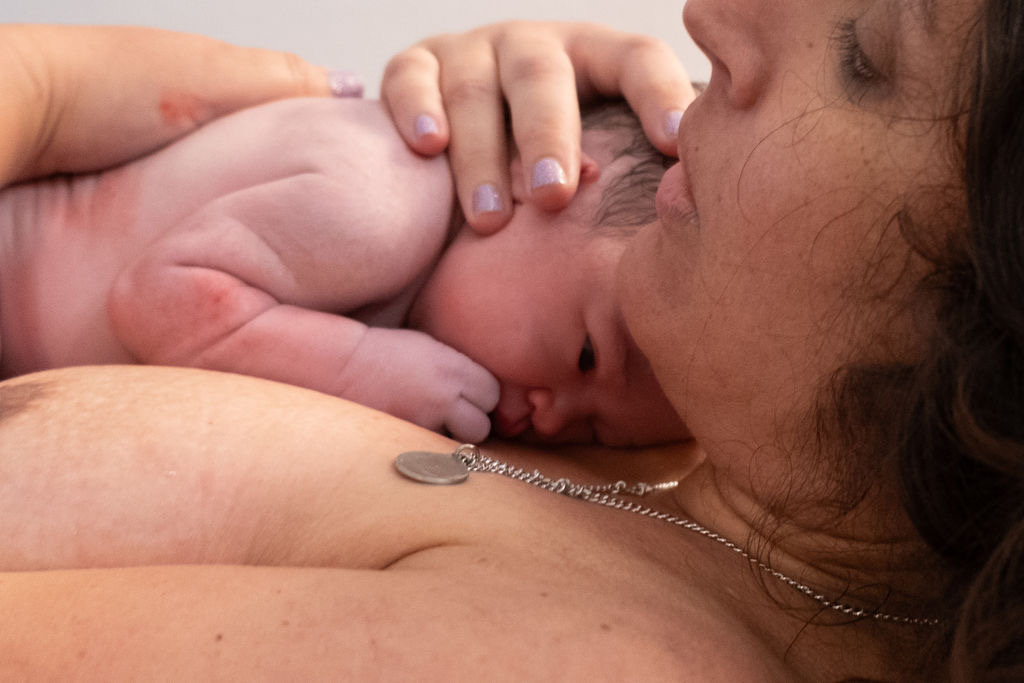
When Fear Drives Induction—What Your OB Might Not Say About Pitocin, Trauma & Mental Health
Fear vs. Evidence
Many birthing people choose induction because of anxiety: “What if my baby isn’t okay?”
The narrative often highlights rare outcomes (like stillbirth at 41+ weeks) but leaves out how induction can change not just labor—but mental health in the postpartum period.
Pitocin & the Cascade of Interventions
Synthetic oxytocin—commonly called Pitocin—induces contractions, but it also disrupts the birth’s natural rhythm, often leading to escalations: epidurals, constant monitoring, assisted delivery, or even cesarean birth. This ripple effect is known as the cascade of interventions.
Pitocin & Postpartum Mental Health
Contrary to assumptions, Pitocin isn’t protective against postpartum mood disorders—it may increase them. A large-scale study (n ≈ 47,000) found synthetic oxytocin use raised the risk of postpartum depression and anxiety by over 30%, regardless of prior mental health history.
Why the Mind Matters in Birth
-
Hormonal Disconnect: Unlike natural oxytocin (which supports bonding, stress resilience, and emotional regulation), synthetic oxytocin doesn’t cross into the brain, denying laboring people neurochemical support.
lamaze.orgnursing.virginia.edu -
Loss of Agency: Interventions can leave people feeling robbed of control—one of the strongest predictors of birth trauma.
-
Linked Outcomes: Higher rates of intervention correlate with higher rates of PPD, PTSD, anxiety and long-term emotional distress.
BioMed Central
How to Weigh Induction—Fear vs Facts
| Factor | What Fear Highlights | What Evidence Shows |
|---|---|---|
| Stillbirth Risk (41+ wks) | Horror stories—rare but impactful | Absolute risk remains low; induction reduces it but only modestly |
| Cascade Risk (Pitocin) | Often unseen | Pitocin increases risks of interventions and emotional aftermath |
| Emotional & Mental Health | Out of scope of typical prenatal chats | Pitocin linked to higher rates of PPD/anxiety; natural birthing hormones guard emotional wellbeing |
| Agency & Support | Rarely addressed | Feeling in control is protective—doula support, freedom of movement, and informed consent matter |
What You Can Do
-
Learn your actual risks—ask your provider to share statistics (e.g., stillbirth rates at 41 weeks).
-
Understand how your provider approaches induction (mobility, monitoring, pauses for tachysystole, oxytocin levels).
-
Decide based on your values: hormonal support? Emotional safety? Certified trust?
-
Build a support team—doulas and trusting providers buffer both interventions and trauma.
Final Thoughts
Fear is a powerful motivator—but not always the wisest counselor. Yes, induction can be needed. Yes, Pitocin works. But it changes the birth—not just physically, but emotionally. Knowing the full story, you can choose from awareness, not alarm.


Leave a Reply
Want to join the discussion?Feel free to contribute!